Welcome to the Leonardo 2026 honorable mentions gallery! Here you will find the pieces that did not make it into print but were finalists in the selection process.
JUMP TO:
Longform Fiction | Shortform Fiction | Creative Nonfiction | Poetry | Art
Longform Fiction
White Noise
By Jessica Diaz
Mountains in Afghanistan swallow sound. Wind rips it up. Rocks scatter it back from places where no one stands. Silence out here never means empty. Silence is full to bursting. Air tastes of dust and iron, and the ground crunches underfoot like sharp stone. The sun does not so much rise as claw itself over the ridges, flinging pale light into the valleys until every shadow looks like a threat.
Our squad had been feeling it all week. Roadside bombs, chatter about fighters on the ridges, village to the south: ambushes, mines. Nights in our conex were short, and the mountains never stopped watching. Kareem, our interpreter, slept with his radio at his shoulder. Quiet voice and a careful mind made him the backbone of our team. Had grown up a province over; you could see the place in his posture, how his eyes measured slope and shade before he put his foot down. Village people trusted him faster than they ever would trust me. I didn’t fault them. We were all ghosts in someone else’s field. The lines on his face deepened with every prayer he translated.
“Forty-eight hours without contact,” Lopez said, kicking a pebble that clattered and rattled twenty feet up the slope before it stopped. “That’s when it gets weird.”
“Define weird,” Hynes said, rolling his shoulders in under a radio pack that always seemed to weigh more when the air got thin.
“You know. Dogs barking at nothing. Old men closing doors when we come by. Kids who usually wave just… don’t.”
I said nothing. I’d learned to save words for when they were worth using. Here, words felt like footprints—you should only leave the ones you mean.
That morning, the radio came alive, a splintering sound like ice cracking on a winter river.
“Civilian missing. Child. Last seen north of Sapedar ridge. Possible injury.”
Kareem, our interpreter, tilted his head to bring me into his hearing. “Nomad family. Boy. Twelve years old. They’re begging for help.”
“Then we move,” Hynes said, slinging his rifle.
“Kid’s out here alone,” Lopez muttered. “Won’t end pretty.”
We found the family camped in a dry riverbed, three goats tied to scrub, a sagging tarp flapping from poles. The mother thrust a small sweater into my hand; the name Sami stitched in blue. Kareem translated, voice a low hum: “Dogs barked in the night. He went to check. He didn’t return. They found blood.”
I crouched to look her in the eye. “We’ll find him.”
Kareem repeated the words. Her stare said promises from strangers meant little, but she did not look away.
The gorge in front of us was a stone throat. We followed small boot prints, the yellow scrap of yarn on a thorn, the bloody handprint where the child had stumbled. Pebbles spilled like mice scurrying at our passage.
Crack. Stone shattered out from near my boot.
“Contact!” Lopez yelped, throwing himself behind a boulder.
“Ridge, two o’clock,” he called, returning fire.
We crouched in the lee of the rock until echoes faded. Kareem whispered in my ear. “They don’t want us forward.”
“The boy’s forward,” I said. Silence after the shots was even heavier.
Around a bend, I saw him. Sami sat mid-slope, knees drawn to chest, a tin cupped to his belly. Two red flags stood by him, just above the ground. Mines.
“Don’t come!” he shouted. “It will explode!” His last word cracked and broke like old bone.
I held up the sweater. “Sami, your mother gave me this. She needs you to come home.”
He shook his head back and forth, a violent no.
“Kid won’t last much longer out here,” Lopez muttered, his lips moving in the radio. EOD estimates forty minutes.
Dust shimmered in the heat like water; it clung to his sweat like ash. The boy’s lips were cracked white.
“Sami,” I called. I stared at him hard enough that my voice stayed steady. “Do you see the stone by your left hand? Touch it gently. Look for any wire.”
He looked down. “No wire.”
“Good. Now shift your hip small as a breath.”
He did, then froze. Click.
“Stop!” he wailed. “I stepped—something!” his voice quivering, scared.
“Don’t move,” I said. “Do you feel pressure?”
“Yes. Right under my heel.”
Lopez cursed. “Two figures on the ridge. Watching.”
“Hold them off,” I said.
I made myself sound calm. “Sami, look at me. Not the ground. Just me. What do you have inthe tin?”
“My sister’s marbles,” he whispered. “I promised to keep them safe.
“You kept your promise. Now we need you to keep another. We’ll get you home.”
He blinked against the sun; breath came like smoke. “I’m scared.”
“So am I,” I said. “But brave is moving anyway. Ready?”
He nodded, jaw set.
“Shift your weight, just a little. Feel for change.”
His lips moved in silent counting. Then—“It is steady. Not moving.”
“Good. Now lean forward, to the ball of your foot. Slowly.”
He tried. Sand shifted like water. His shoulders heaved, but the ground did not sing.
“Now slide your foot ahead. Just an inch. Like sneaking past your goat.”
That got a laugh from him. “Nura always tries to bite me,” he said.
“Then prove you’re smarter.”
He slid, froze, slid again. Sweat streaked his cheeks like war paint. Each movement took a lifetime.
Gunfire ripped along the ridge; Lopez returned fire. Sami jumped, but he did not give. Inch by inch, the boy closed the distance.
At last, he stumbled free of the crater, fainted forward into my arms, light as a sack of twigs.
Voice was a whisper. “The blue letters… You kept them safe.”
“You did that,” I told him.
We pulled fast back to camp, shadows doubling us in length. Whoever had watched us did not fire again. Silence settled over the place. Not safe, just less sharp.
Back at the camp, his mother saw us over the rise. Her cry was not a word but a sound older than that, wrung out of the earth itself. It held grief and relief braided so tightly they were one rope. She ran, Sami pressed to her chest, kissing his hair, crying in the sweater. The father put a hand on his son’s head and closed his eyes, like he was hearing a prayer that had at last found the words.
Kareem murmured, “For them, you brought the wind back.”
Sami’s sister darted out from behind the tarp, braids askew, eyes wide as the valley. He held out the tin. She shook it once, twice. Click of marbles like rain.
Mother pressed dates into my palm, sticky-sweet, still warm from the sun. A thank you the mountain would never hear.
Back at base camp, Kareem paused in the doorway. He looked at me, then at the small strip of sky visible between the conex roofs. “You know,” he said, “when my mother used to tell us stories, she always began with the wind. ‘Once the wind decided to speak…’ Today, I think you made it speak.” He nodded once and left me to the moth and the dates and the weight of a quiet that didn’t feel like an ambush.
I lay back and let the mountains do what they do: swallow sound until only the important pieces remain. Somewhere in that pocket of quiet, a goat named Nura tested the fairness of the world on a boy’s hand, and a girl counted twenty-one marbles and then counted again, just to be sure. That night, in the dim of the conex, I thought of the minefield’s sound: nothing, white noise. Silence, heavier than thunder. The kind that lets you hear your own heartbeat and reminds you—you’re not a ghost yet.
The Grinning Shape
By Alina Promise
Xavier tried not to look in the corners anymore; that’s where the shape hid, grinning too wide like it was waiting, wanting something from him. Sometimes it was deep in the shadows, its freakishly long arms and legs folded into itself, just a face of shiny white teeth and huge black eyes peering from the dark. Other times it was closer, leering from above its head, brushing the ceiling. The shape hadn’t always been there, or at least Xavier hadn’t seen it before. Maybe he had just become aware of its presence, and it had always been there all along, hiding in the shadowy corners, watching, waiting.
He remembered the first time he saw it. It was late, too late for Xavier to be awake on a school night, but sleep had been escaping him as of late. His mother said that’s why he was always complaining about the dull headache that sat behind his eyes; it was the late nights and bright screens. He told her that he stopped sleeping due to the dull headache being there night after night, then she said it was because he wasn’t drinking enough water.
But that night, his dull headache was no longer dull but throbbing right behind his right eye. The heavy pressure in his room wasn’t helping either.
The house was silent except for the faint hum of the refrigerator downstairs and the trickle of the fish tank in the hallway. The only light came from his phone in his hand, casting blue shadows on the walls around him. Xavier was tired of fighting to keep his eyes open, but every time he tried to close his eyes, the exhaustion faded away, and he was all too aware of the heavy pressure in the room, the hum of the refrigerator, and the trickle of the fish tank, and he was awake again. He squinted at the phone in his hand, blinking rapidly as it swam in and out of focus.
Then something shifted.
The pressure became even heavier, pressing against his skin. Out of the corner of his eye, the shadowy right corner of his room seemed to twitch as if it was alive.
He focused his eyes on the corner and blinked once, hard.
And there it was.
At first, it looked like a darker shadow cast by an object nearby, but then it twitched again, and even in his exhausted state, he knew shadows weren’t alive.
The throbbing headache behind his right eye was spreading and causing Xavier’s vision to swim. He squinted, and the shadow twitched harder, and then he saw it.
White broad teeth, too white, too many, too wide. Huge inky black eyes blinked back; the whites around them in stark contrast to the shadows in the corner. The shape unfolded itself, long angular arms stretching impossibly far and legs that carried the shape’s head right up to the ceiling. And now the shape was leering at him from above, but instead of coming closer, it froze, blinking slowly, watching, waiting.
Xavier’s heart was pounding, matching the rhythm to the throbbing in his head. Cold needle pricks danced across his face. He didn’t scream. He couldn’t. The scream was frozen on the back of his tongue.
Time ticked by, and the shape remained grinning and blinking from above. And then, just as suddenly as it had appeared, it folded its long limbs back into itself and faded into the shadows like it had never been there before.
That night, Xavier didn’t sleep much as he waited, his eyes glued to the corner, wanting for the dark to shift again. The room seemed smaller without the looming shape, although he could not figure out why. Everywhere his eyes looked, shadows clung to the corners that he was sure hadn’t been there before, thick and damp. Every sound was stretched too thin; the trickle of the fish tank and the hum of the refrigerator were all too loud and too alive. But not loud enough to overpower the frantic beat of Xavier’s heart. He tried to calm himself by whispering, “It’s gone, you’re tired, you just imagined it.” But his voice was weak, and his mouth was dry.
But when he turned his head back to the corner, the shape huddled in. He thought he saw the outline of something darker than the dark itself. He squeezed his eyes shut and continued to stare until the outline faded away, then he blinked and saw the grinning shape again, closer this time, only for a heartbeat, only long enough to feel the weight of being watched and a scream collecting on the back of his tongue before it was gone again.
By dawn, he was trembling and cold; the room lit with that gray light that makes everything look dull and washed out. The shape had been gone for hours, and yet he could swear there was something behind a heavy pressure that hung suspended within the room.
From that night on, Xavier never stopped seeing the shape in the shadowy corners of every room he was in. He sees it now, leering from the corner of the kitchen just mere feet from his mother cooking at the stove. Xavier blinks back at the shape. He knows it’s always there, watching, waiting. Terror has dulled into something else, acceptance maybe, or maybe exhaustion. He still wasn’t sleeping, and the dull headache returned every night right behind his eyes.
Xavier ripped his eyes away from the shape and plastered a smile on his face as his mother approached him, fussing over his hair.
“We need to go to the barbershop soon, Xavie, your hair is getting so long. How can you even see out of these ridiculous bangs? Let’s make a trip out of it, yeah? I’ll call in to the school for Friday.” His mom smiled at Xavier, and he nodded, glancing over her shoulder at the shape. It was folding back into itself, and then it was gone.
His mom turned around, looking in the direction his eyes were. “What are you looking at?” she asked, turning back.
“Nothing.” Xavier said, smiling at her, “That sounds good. It’ll be fun.”
That seemed to ease her concern, and she rubbed his shoulders. Xavier had stopped talking about the headaches and the long sleepless nights, but she wasn’t very good at masking her concern. His mother had a face that did more talking than she did; maybe Xavier did too.
Both of them pretended the moment had passed, but it hadn’t. Xavier’s silence came from exhaustion; his mother’s from denial. Xavier didn’t see the worry, still clinging to his mother’s expression as he turned away. She’d been watching him change over the last two months, the tiredness in his eyes, the way he winced as night approached, rubbing his eyes, and the way he stared at empty corners as if something was staring back.
Ever since his father passed away three years ago, there were many words left unsaid between the two of them. His mother did her best to protect him afterwards; Xavier thought he was protecting her.
What neither of them admitted even to themselves was how familiar silence had become in their home. It hung suspended in the air, seeping into the faded blue walls of their townhome. In that silence, they both convinced themselves the other didn’t notice; too afraid to break the silence in fear that the reality of his father’s passing would make things shakier.
And in the silence that ruled their home, the shape continued to hide in the shadowy corners, grinning at Xavier, waiting.
He hadn’t told anyone. Not his mother, not the few friends who called and stopped by to check on him. He couldn’t even bring himself to whisper it to himself after all. How could he explain something he wasn’t sure existed? Besides, in a way, he had become used to the shape leering out at him; denial hadn’t worked, and he’d stopped flinching at the sight of the grinning shape weeks ago.
The shape had settled into his life the way dust settled into the corners it loved to occupy so much. That’s not to say that he was not terrified of the grinning shape; he still was just not in the same way as the first time it unfolded itself in the corner of his room. The fear had dulled into something quieter, like the hum of the refrigerator you only notice when it stops.
At times, the grinning shape unfolded to its full height, its head brushing the ceiling, its grin still too wide, its teeth still too bright and too many. Other times, it was folded into itself, and was just a smile leering out.
Whenever it reappeared, Xavier would feel the ice-cold needle pricks across his face, and yet he couldn’t look away as if it might leap from the corner at any moment. He felt safer when he looked at it. There was a strange relief in letting the fear wash over him, in admitting that it was real to him, grinning from the corner, never leaving.
In a way, he had accepted the grinning shape’s presence the same way he’s accepted his father’s death, quietly without worrying his mother. When his father died, he had had many a sleepless night as he flipped through every memory of his father he had. Afraid if he stopped thinking of him for a moment, he would fade away into empty corners never to be remembered again.
The fear of the grinning shape was different from his grief, but it settled in his bones like it. Both were heavy; both demanded his silence. The shape, like the memory of his father, became something he could not escape.
Sometimes he wondered if the two were connected, if the grin in the corner was just some psychological answer to his grief, but the more he thought of that, the sillier it became.
On Friday morning, the sun was too bright. The hum of the barbershop clung to Xavier’s nerves, clippers buzzing, laughter cutting through the smell of aftershave and shampoo. His mother sat to Xavier’s left on a bench, absently thumbing through a sports magazine she wasn’t really reading.
He stared at his reflection as the barber snipped away at his long hair. A dull headache started behind his eyes again, and the mirror shimmered slightly like heat rising off of the pavement. For a moment, the room tilted, bending inward before settling into focus again. He blinked hard, forcing the dizziness away. The sleepless nights were starting to take their toll. As if on cue, the exhaustion settled into his bones, and he yawned.
Then he saw the grinning shape.
In the corner of the mirror, behind a row of chairs and jars of combs, the shape grinned, stretched to its capacity, its head brushing the ceiling. Its reflection in the mirror faint, caught between the light of the day and the shadows in the corner. The shape grinned too wide; its teeth were too white and too many, waiting.
Out of the corner of his eye, he saw the barber ask him something, maybe small talk, but Xavier barely heard it. His mother’s voice drifted in the distance as if he was hearing it from underwater. He nodded, unsure if what she asked was even a question. He flicked his eyes back to the corner. The shape hadn’t moved. It simply grinned at him through the mirror, patient and waiting. Xavier still was unsure what it was waiting for.
The barber placed his hand on Xavier’s shoulder, and his vision swam again, and he tore his eyes away from the huge, inky black eyes grinning shape to meet the barbers in the mirror. He offered a weak smile and cleared his throat, “It looks great so far.”
Xavier didn’t notice his mother watching him from the bench, the magazine open but still unread. She noticed how still he had become. The barber was talking and laughing, but Xavier’s distracted smile didn’t reach his tired eyes. It rarely did these days.
Xavier had always been a quiet, calm child, but this was different; there was a tiredness and distance from him now, something she couldn’t put her finger on. The way he stared into the mirror made her uneasy. His gaze wasn’t on his own reflection but rather something beyond it, as if he was looking through the glass instead of at it.
“Are you doing ok, Xavie?” She asked softly so as not to embarrass him in front of the whole barbershop.
He nodded quickly, distractedly, and continued to stare in the mirror before blinking hard and looking at the barber’s reflection, “It looks great so far.”
He turned to his mother and smiled, but it faltered as if he could see the thoughts in her head, “I’m ok, mom. Just tired.”
He always says that these days.
She took a deep breath and mustered up a huge smile, but inside it felt hollow. He looked pale, his skin paler than usual, his eye bags were darker than they’ve ever been, and the faintest tremor shook his hands that rested on the arm of the chair. She made a mental note to call his doctor again, though she doubted he would get them in for another appointment right away. She had brought him into the doctor’s office quite a few times since his father passed. She knew she was overcompensating for being the only parent now. The doctor said grief; he hated the fuss, hated the questions.
She gathered her overstuffed purse as Xavier slid off the barber’s chair. He moved slower than usual, his steps slightly uncertain, as if the floor beneath him had turned into a different texture. She moved forward to help steady him, but before she could, he brushed against a glass dividing wall with a muted thud. The sound turned a few heads.
“Xavie-”
“I’m fine,” he said quickly, offering an awkward laugh as he opened the door for her. She noticed that he held the handle tightly as if he needed it to keep his balance.
Outside, the sunlight made him squint. He walked toward the car in silence, his shoulders drawn in an unreadable expression on his face. She said nothing, just unlocked the doors and waited, telling herself not to overreact.
Xavier stared out the window as the car started moving, the reflection of the passing cars and buildings smearing into colors like a Monet painting. The hum of the engine blended in with his throbbing headache. Every few seconds, his vision wavered like a heat mirage before settling again.
In the side mirror, something impossibly dark flickered. Just a shifting shadow, but he knew the shape. He had stared at it long enough these past two months. The familiar curve of that leering grin appeared between passing cars in the reflection, vanishing before he could truly get a good look at it, not that he needed to.
And just like always, he didn’t tell his mother. She’d just worry and rush him back to the doctor’s office. There was no point in worrying about something that never stayed long enough to prove it was real.
Another flicker of the grin, and the headache intensified.
Xavier looked ahead, and the hum of the car deepened, pulsing with the headache behind his eyes. Xavier pressed his temple against the cool glass of the window, hoping the chill would help his headache until he could get home and retrieve an icepack. The pain was sharper now, flashes of white behind his aching eyes, like a camera shutter going off in a dark room.
“Mom?” He started, but the word came out quiet and thin.
The air inside the car grew heavy. Every noise stretched out: the faint click of the turn signal, the rumble of the car engine. His fingers twitched and tightened against his jeans.
Outside the window, the world was tilting, buildings bending into impossible shapes. The grinning shape flickered in every reflection now. The side mirror, the window, the reflections in the passing cars. The grin remained too wide, too bright, and with too many teeth, and the shape was still waiting.
He blinked hard, but the motion felt delayed, like it was happening in a slow-motion scene in an action movie. A low buzzing flooded his ears. His mother’s voice was there, faint but high and panicked like it was underwater.
The shape was right outside the car window now, its grin stretching wide until everything dissolved into light.
——————————————————————————————————————
From above, the hospital room looked cold and still, like most hospital rooms do. Machines hummed and blinked in patient rhythm. The air was cold, antiseptic, and reeked of an alcohol cleaner.
Xavier lay beneath the thin white blankets in the huge hospital bed. He looked impossibly small and frail. His mother sat close; her fingers laced around his hand tightly as if to comfort herself. Her eyes were red and sleepless; her mouth trembled ever so slightly as if she would scream at any moment.
The doctor stood nearby, voice low as he conferred with a nurse. His words floated and faded before reaching where Xavier and his mother were, just another sound mixing in with the beeping and humming of the machines.
Xavier was awake, but distant. His gaze wasn’t on the doctor nor his mother, but in the right corner of the room where the shadows sat, untouched by the light. He was staring at the corner as if watching something that was close to the ceiling, his face a mixture of tired acceptance and just a tinge of fear. Maybe even sadness.
The shape was grinning from beneath the harsh fluorescent lights, its mouth wide and still. Its shape was impossibly dark in the bright room, slightly blurred at the edges like it was painted in. It shouldn’t have been there, but it was, watching. Waiting.
“Xavier?” His mother whispered, following his gaze to the empty corner.
The doctor nodded and stepped back, moving closer to the bed, regaining her attention. He sat in the rolling chair and slowly rolled up to his mother and gently grasped her hand. “Mrs. Martinez,” he said quietly, “your son has a brain tumor.” END
Watchers in the Fog
By Joseph Treen
I could feel their eyes boring into my head like a drill through a piece of plywood. Were they staring at me because I was walking so quickly, or because they knew? Surely, they
couldn’t know. Even they couldn’t have seen it. Not in this fog. I could barely even see where I was going. I knew my house was just up ahead, but the fog hid it from me just as it did everything else. Not that I would be safe there. My house was no more a home to me than a prison is to a prisoner. I tried to calm myself, to slow down and not make myself look so
obvious. I couldn’t see them, but I knew they were standing just out of sight. They stared at me
like some grotesque thing. Did they know? I found my house through the fog and stumbled in.
“You’re home!” said the woman in the kitchen as I passed through. “I was worried about you out there.”
Of course she was. Despite the sweet, motherly concern in her voice, I knew she only cared about the fog because it was harder to see me in it. I took a moment to look at her face. Her infuriatingly warm smile and kind eyes were the same as always. Did that mean she didn’t know? Or was she keeping up the act anyway?
“Dinner will be ready soon. Go wash up.”
I ignored her and rushed to my bedroom. I wedged the chair under the doorknob and looked around carefully. My blinds were open again! I stepped over the pile of wooden models, some of them unfinished and some of them broken, so they could never be finished, and pulled the blinds shut. Then I grabbed the television off the floor, careful not to snag myself on any of the loose wires which had been torn out of it, and placed it in front of the mirror where they kept the camera. I sat down on my bed and pulled my blankets over my head, squeezing my eyes shut.
I focused on my breathing and tried not to think. Deep breath in, breath out, deep breath in, until my body stopped shaking and my heart stopped racing.
Then a knock at the door snapped me out of my moment of peace. My heart began to tremble again.
“Come out to eat. I made your favorite!”
I clenched my teeth and focused on my voice, doing my best not to reveal that anything
was wrong. “Kay!”
I waited a moment for her to step away from the door before going out. I kept my head down and scooped the food onto my plate. I started to rush back to my bedroom when I noticed that the table was set for two.
“Come sit down with me,” she said. “You always eat in your room. I want to sit with you for once.”
“Wh-why?” My heart shook my chest like an earthquake, and my stomach twisted.
“Can’t I just have dinner with my kid?” Her sad expression told me that there was no getting out of this. If I went to my room now, she would know for sure that something had happened.
I sat down quietly and stared past my food, trying to muster the will to eat it. The smell that had once made me so happy now made my stomach churn. If I threw it up fast enough afterward, I might be alright. Did she know that I had been throwing her food out, and she wanted me to eat it in front of her, or was this about today? Did she know?
“I hope that this fog goes away soon,” she said, trying to start a conversation. “It feels like forever since we’ve seen the sun.”
“Yeah,” I muttered in response. I already knew how much she and all the rest wanted the
fog to go away.
“What have you been doing lately?” she finally asked. “What were you doing today?” “I… I was just going for a walk. Nothing special,” I managed to answer after shoving a
bite of food down my throat.
She seemed not to know how to answer. “Are you still going to any of your clubs? You haven’t talked about any of them for a while.”
“No. I stopped going a couple months ago.” Why did she ask questions she knew the answer to? “They weren’t any fun,” I quickly added, not giving her an opportunity to interrogate me anymore.
“Oh. Well, have you been hanging out with that Adam boy? The two of you seemed to get along well.”
So, she knew all along! I wiped the sweat off my forehead and tried to think. What was the point? If they all knew, then there was nothing I could do. But why did they act as if they didn’t? Why was she still keeping up her caring, motherly act? My eyes danced around, searching for a safe place to rest on, but no matter where I looked, I could feel her penetrating stare. Deep into my mind. Could she see even my thoughts? And she wasn’t the only one.
Curious faces hidden by fog looked in through the windows, waiting to see how I would answer the horrid question.
“What’s wrong?” she asked. “Are you alright?”
Her voice almost made me vomit. My eyes finally landed on her face. It looked truly concerned. For a moment, I felt offended. How could she, of all people, act so concerned about me!?
“Nothing,” I said. “I’m fine.” I could keep up the act, too. What else could I do?
She sighed. More concern filled her saddened eyes.
“I saw your room. I saw the television with the wires torn out. I saw all your models.” I silently willed her to shut up, but she continued, “You’ve always enjoyed making them so much, and you were so proud of your collection. I just don’t understand what’s wrong. Ever since you dropped out of school and quit your job, you’ve been off, but I hadn’t realized it was this bad.”
“What gives you the right to say any of that!” I exploded. I jumped to my feet, sending the food flying to the floor. “I was happy before you all started watching me!”
She struck a face of bewilderment. She even looked a little scared. She really didn’t know. If she did, she would have been terrified, and the voyeurs outside wouldn’t have been standing around laughing. Or maybe they would be. Maybe this was all just a big joke to them.
“What are you talking about? Just calm down and explain to me what’s going on.” Her teary eyes pleaded with me, and I wondered why she hadn’t just become an actor instead of
doing this to me. “Please, I want to help you!”
I wanted to do to her what I did to him, but I couldn’t. Not with everyone watching. And she was my mother once, though I thought she had already lost what little grace that earned her. I needed to get away before they saw me do something bad. I escaped into the fog, and in seconds the light of the house had disappeared. They were all moving quickly to keep up with me, to see what I might do.
I ran. I could barely see the ground beneath my feet through the fog, but I ran. I ran as fast as I could until I couldn’t hear the woman’s scared voice calling after me, but even then, they watched me. They wouldn’t let me get away. My chest hurt, and my heart felt like it
wouldn’t be able to race much longer. Why couldn’t I get away? Why wouldn’t they stop watching me? My feet slipped on the moist grass, and I fell to my hands and knees. I wiped away the tears which stung my eyes and felt their faces sneering at me. The gentle sound of the tide lapping at the beach reminded me where I was.
“No,” I muttered.
I hadn’t meant to go there. To lead them there. I didn’t know where I was going; I just
wanted to escape. Now they would see what I had done.
“Don’t look!” I screamed. “Go away!”
I pushed myself up with a damp boulder and waved frantically at them.
“Please! Stop it!” I sobbed.
“Please, come home! I’m scared for you.”
It was the woman who claimed to be my mother. She stepped out of the fog and tried to grab me, but I stepped back onto the sand of the beach.
“Don’t come any closer!”
But she didn’t listen, and as she moved forward, she saw it. She saw what I had done. His body lay in the water, which had washed away the blood and made him almost seem as though he was in a peaceful slumber. The others saw it too, and they looked at me as if I had done something horribly wrong.
“Is that Adam? What happened to him? Is he alright!?”
“Isn’t this what you wanted!?” I cried. “You all stopped watching me when I was with him so that he would be the only person I felt comfortable with, and you wanted me to believe he was the only one not watching me! But he was just like the rest of you! You always planned to make me do this!”
Her whole body shook as her frightened eyes stared into me. I felt my chest burn as I looked at her lying face. Why wouldn’t she stop staring at me!? Why wouldn’t they all stop staring at me!?
“What did you do to him!?” she cried. Now her obsessive eyes were full of accusation. “Stop looking at me like that! Stop looking like you care!”
She didn’t turn away. Her eyes delved into my soul as though she could pass judgment
on it.
“Is he dead?” Her voice was so soft I could barely hear it, and her eyes were filling with tears. I tried to back away and hide behind the fog, but her eyes wouldn’t stop watching me.
So I made her eyes stop. Just like I made his when I caught him staring at me. The sand turned red under her body, and I dropped the stone which had left its imprint in her skull. I tried to wipe away the streams of tears on my face, but they wouldn’t go away. They had seen me do it. They knew what I had done. But they weren’t scared or sad. They just stared at me like I was the monster. As if they hadn’t made me do it all.
I turned to them and screamed, “This is what you wanted, isn’t it!? Aren’t you happy
yet!?”
I was answered with disgusted stares. A strong wind began to blow cold on my tear-stained face.
“What do you want from me now!?”
The wind howled, and the trees creaked. In a few passing moments, the fog had been carried away, and the wind left as quickly as it had come. The sun lit up the blue sky, and birds began to sing. I looked around for the crowd of watchers, but there were none. I was alone…
No. I couldn’t be. I wasn’t alone. The fog might have been gone, but they had hidden
themselves in some other way! I looked down at the woman. Her glassy eyes looked back at me.
It would never end.
Shortform Fiction
Dreamland
By Winter Tolson
There’s been water dripping down the living room wall for days. The more it drips, the more it congeals, like negligence itself is causing it to thicken. It’s not that we haven’t noticed. I actually haven’t been able to stop looking at it in quite some time. I told her about it the day it started happening, asked if we should be concerned that her apartment was leaking. She said, “Why worry about a thing like that?”, so I just let it fall to the side as we fell to the floor. A week later and it seemed like it was something overflowing. At least I think it was a week, somewhere in that time her clock stopped running completely, but I didn’t know if I should mention. I asked her if she wanted me to fix it, she asked, “What, the clock?” and I said no, the water pouring down the wall. She asked why I was so hung up on that. I didn’t know how to respond, so I just took the clock apart while she went to bed. I think one time when I was a kid, I fixed a broken pipe with my dad, but it’s not like I remember the steps. I wouldn’t even know where to look for the source of the leak. I keep asking her to sleep in the living room, it’s not like she could care one way or the other. When she’s asleep, I don’t even try to pretend I’m tired anymore. I just sit and watch as the water becomes syrupy. Neon blue staining her pink wallpaper. I think it’s gotten more and more blue somehow as time’s gone on. If time has gone on. Water used to be clear, I swear I remember it like that. It didn’t used to be so fluorescent. It didn’t used to look like it was glowing in the dead of night.
But now it does. It moves so very slowly, but it is moving. When the world is completely silent, the nearly imperceptible slide of the thick water layering atop itself becomes entrancing. It glows like it’s begging me to watch it. To keep a close eye on it. I don’t even notice when the sun rises; I only notice the glow disappear in the sunlight.
Then the sun doesn’t set for days. How does one even measure a day without the sun’s change in position? Who am I to declare time hasn’t passed just because I haven’t seen the sun move? If the sun is our great dictator of the day, then how long do I wait, spiraling beneath it, until my concern is of any matter at all? Lying on the patio for hours. And hours. And hours. I think? Liquid gold, melting hot and viscous over me. I wish it would end. I wish I would sink beneath the water and drown peacefully. Instead, I move through the sun slow, lethargic. I feel disgusting. I stand up, go back inside. The sun isn’t any less opposing in here, but there’s plenty of water. If I were a plant, this would be everything I could’ve asked for. Sun and water. Nothing else.
I scratch slow up, and then back down one arm. I do it again. Again and again, until the skin gently starts to peel back. In this dream I keep having, I imagine I pull a vein out, and it’s just a sproutling of some plant I’ve never seen. Light green, it glows in the dark, like the water on her walls. These perfect little leaves, heart-shaped, curled just slightly at the ends. I dream of so many of these, peeling gently out of my skin, blossoming in the darkness I no longer experience. I imagine them glowing so bright, something finally lights up within myself. I wake up, and she’s gone. All that’s left is the sun and the water.
When she’s not here, sometimes all I can do is pace in circles. It starts with just standing. Everyone’s stood up before; it’s normal. It starts with both feet flat on the ground, parallel, my body upright. Then I wonder if it is so normal to stand like this, staring at my feet. So I look up at the walls. They’re leaking, always. I look back down at my feet and wonder if I should’ve been walking by now. So I take one step, then hesitate. Is it worth it to spend this energy on myself? She’ll be back any moment. I believe you should invest all your energy on the person you love. And I do love her, right? Of course, why even question that. Now it’s awkward that I’m standing still with my feet staggered, so I move the other foot forward, too. Does it mean something if I happen to question whether I love her? Does it mean something bad? I didn’t mean anything by it. Is it weird that I’m just standing still? I start walking forward, eyes on my feet. I picture her face, really try to envision her being right here in the room with me. I walk into the wall on accident, then just turn around and walk the other direction. I analyze my reaction to her image in my mind. I make sure I’m feeling all the things you’re supposed to feel for your lover. Is that what we are? Would she find it weird for me to call her that? I manage to stop myself bumping into the couch, then I turn around and walk the other way again. I know that I love her, and that’s all that matters. If she knew I was having doubts, would she even keep me around? I walk in circles for eternity across the soft carpet, barely able to feel it as the monotony wears on my feet like years of calluses.
She comes back for a moment just to change. She asks, “What are you doing?” and I know it’s rhetorical. All I’m doing is standing still, looking at my feet in the neon water. I wonder if it’s too thick to drown in now. I just respond nothing, sorry, and she leaves again.
The sun has begun to soak the apartment, flooding it completely. So inundated by the warmth, I can’t help but lap at the walls, trying to get relief from the suffocating heat. The water dripping from the walls feels slimy, my tongue defiling the surface. We’ve ignored it for so long, it’s gathered in large piles in every corner of every room. I shove my face beneath it and breathe in deeply. It only suffocates me more. It tastes like nothing, and even that is its own solace. It squishes grotesquely between my teeth, and I could almost swear I was chewing a person’s flesh. When I scratch at the walls, the gel gets stuck beneath my nails, glitter embedding into the vulnerable skin. The ceiling fan loops in perpetuity, oblivious to my misery. A misery I desperately try to relieve, soothing my ache by pushing as much of my body under the water as I can.
I met her at a house party, late in the night in the early days of summer. The days before the sun starts infecting everything you love. I don’t remember whose house, I don’t remember why I was there. Only that time seemed to stop the moment I looked at her face, and it was like everyone around us disappeared as we started talking. The words were meaningless; it only mattered that she was there in my life. I watched her lips move around the air I was lucky enough to be breathing. I sat hypnotized by her eyes forever, though she never seemed to be looking right at me. At some point, she led me back to her apartment. I’m not sure I’ve left since. Young summer lovers, how lucky I was to be encased so completely within her.
Her bed smells less like her every day. I don’t know when she was last home. I don’t know if she’s coming back. I lie face down, move my hands along the sheets with the same reverence I would if she was here. If I close my eyes and imagine it, I could almost say they have the same texture as her skin. The more I try to pretend this is her, the more I lose the memory of her beside me. I inhale as deeply as my lungs can manage, trying to hold the remnants of her there with me. I bite the sheets, hold them in my mouth, hungry, trying to absorb any part of her I can still find.
I stumble out of the bed and to her closet. I put on the dress she was wearing when we met. The world feels like it unravels. I eat her food, and remember that I’ve forgotten to eat in a while. Probably. The fridge is entirely stocked with fruit, and it all tastes like blood. Everything bitter and metallic. I swallow it all the same, salivating incredibly. When I’ve consumed it all, I look down, her pink dress splotched with deep red in several places. I turn on the TV. All that plays is static, but it’s noise. Noise I haven’t heard in a long time. The sun falls, at long last, quick and easy below the horizon. In the dark, everything glows. The water, the TV, the open fridge. My skin.
I run to her bathroom, the moon glimmering so devastatingly perfect through the skylight. My soul feels heavy in my stomach. I pull the thick blackout curtain off of the mirror, and I see eyes. My eyes, I have to assume, but I barely recognize anything on this face at all. After such a rush, the moment seems to slow to a steady beat. Not stillness, but steadiness. I don’t think I’ve ever worn a dress before now. I don’t see any familiarity in the mirror at all. Were you to show me this person, I would not identify it as myself. But it moves just as I do, blinks in the same patterns, feels the same emotions. My reflection does not recognize me, either. This thing we have become. Even the moonlight disperses into the void, and then all the light left is our skin gently shining. We pick at it, methodically, as we maintain eye contact. It unravels effortlessly. Flowers and leaves bloom from what I would have guessed were veins. Everything else just melts into the thick, glowing water I’ve come to know so well. Until all that is left is a puddle on her bathroom tile, and my reflection’s mournful expression.
Primetime
By Brandon Stivers
Officer Salazar returns to his home after a long day in the city. He arrives early enough to kiss Mrs. Salazar before she begins her shift at the hospital. The television turns on. He has no need for the primetime news; he’s seen plenty of the world today. And he’s tired of all the gritty crime dramas; they’re simply unrealistic. No, what Mr. Salazar needs is a good laugh; something to drive away that pre-night gloom. He switches to his favorite channel just in time for Dinnertime at the Fitzgerald’s. Young Danny hasn’t touched his mother’s infamous beef stroganoff, and neither has Mr. Fitzgerald. The tension does not seem to bother their hungry new puppy. It seems Danny failed another test today. Mrs. Fitzgerald finishes her meal quickly and makes herself scarce. Officer Salazar changes the channel before the argument begins; he has no time for reruns. Maybe he needs some cheesy romance tonight. The channel switches to That’s Martha! He catches the showing in time to see this week’s special guest: A middle-aged Caucasian with bags under his eyes. He arrives in a white button-up and a loosened tie. Identical to the rest of her guests this month, though the dog doesn’t seem to like this one. They’re running out of ideas. At this point, Officer Salazar should ask for his own spot on the show! This wouldn’t do at all. Maybe he needs a new series. He was just over at Johnathan Creek’s house the other day, after all. There’s no way he’s noticed the small black dot in the corner-void of his living room yet. You’d think the man had gone blind with how dark he keeps his house. So let’s see what he’s up to.
The channel changes, within the frame is Johnathan Creek, his couch, a lounge chair, a mountain of magazines with a table underneath, and the sliding glass backdoor. If you squint, you might be able to see Johnathan’s German Shepard, Molly. Even if you miss her, you can’t ignore her endless barking at the traffic going by behind the house. Johnathan sure can, though; he’s fast asleep. With how loud the TV is, he must be deaf, too. How disappointing! No suggestion of what caused that noise complaint or why Johnathan insisted on a warrant last week. The neighbors probably just want someone to deal with that dog. Before he moves to change the channel, Officer Salazar notices two things: Johnathan is asleep with his eyes open, and Molly has stopped barking. In fact, here she is now, in clear view of the glass sliding door.
Looking.
At.
Salazar.
Now a third thing: Johnathan Creek was not breathing.
Certain questions of ethics haven’t been in Officer Salazar’s mind for years. He does what he’s told, and doesn’t do what he’s told not to do. Luckily, no one has told him not to add some channels to his television. Certainly not by Deputy Bradley, who procures the cameras from the equipment shed whenever he can. But this has complicated things. Molly seems to echo his movements as he paces. He can’t just leave a corpse in his neighborhood. He’d be unable to sleep until it was dealt with. And what if it was homicide? He couldn’t stomach a killer on the loose. Catching a murderer is a very rare opportunity for Officer Salazar, after all. Obviously, he needs something other than this footage, though. Johnathan Creek only lives a few blocks away; maybe he was just driving along and heard something suspicious. His keys end up in his hands, and he climbs into his cruiser.
There is no camera on the outside of Mr. Creek’s home. Molly, now inside the house, within the frame, does not bark when Officer Salazar parks at the curb. Or when he knocks. Or when Johnathan gets up and invites Officer Salazar into his home. After a muffled conversation, Johnathan Creek will shake his hand. Unfortunately, this is when the footage cuts out, no weapon is visible. All the little dot in the corner sees is the amicable Mr. Creek giving his thanks to the police officer. The camera catches Molly’s eye again as the footage cuts to static.
When the feed returns, Deputy Bradley can be heard from the doorway. There has been another noise complaint. Mr. Creek plays it off. Those neighbors hate him, after all. The cops already searched his house. What more could be done? Had the deputy brought that warrant, however, he may have found what little bits were left of Officer Salazar. He may have seen Salazar’s head on the living room chair, eyes glued to the television. The screen cuts to black this time. Mrs. Salazar wails and wails, unable to do anything but watch as the live feed loops.
Officer Salazar returns to his home after a long day in the city…
“Watching me watch them watch me.”
Creative Nonfiction
Tomatoes and Avocados
By Pilar Tellez Giron
In life, you will have a partner in crime, an accomplice, and a loyal friend. For me, that was my older brother. He was only a year older than me, but when you are growing up, even one year feels like a whole universe. We shared everything, our jokes, our anger, our boredom, and most importantly, our bedroom.
We grew up in Mexico, and in a big family, privacy was something you imagined, not something you had. Our room was small, two separate beds squeezed against the walls, always messy, always loud, but it was ours. Clothes covered the floor like they were part of the design. The PlayStation wires twisted across the ground like vines. We fought over everything, the fan, the tv remote, the last donut.
Turn on the AC! I would yell.
It is on!” he would yell back even when it clearly was not.
Sometimes we argued just to argue, just because that is what siblings do. But the chaos always felt strangely comforting. Being nice to each other was weird.
His PlayStation glowed blue into the night even when he had already passed out, the controller still in his hand. If the explosions on the screen got too loud, I would throw a pillow at him.
Turn it down!
Five more minutes, he would mumble, already half asleep.
You said that an hour ago.
I’ll turn it off… in a bit.
He never did, but somehow, I did not mind. A quite room was something we did not know.
The room should have smelled like sweat and old food, but most days it smelled like flowers. My mom cleaned with strong scented products, and we cleaned the room together. Surprisingly, it was the one thing we did not fight about. We knew our responsibilities!
Sometimes at night, the flicker of the TV would dance across the ceiling, and the room felt like its own tiny universe. Even when we were not talking, I felt like I knew him better than I knew myself.
One of my favorite memories is how we always traded food without speaking. If my mom made salad with tomatoes and avocados, we already knew the plan. Without looking up, he would slide the tomatoes to my plate. I would push the avocados to his.
He would raise an eyebrow. Fair trade?
Always, I would say.
It sounds small, but those moments were our language. We did not need a thank you, we understood each other.
After we moved to the United States, everything changed. We finally had our own rooms, something we thought we had wanted for years. But the first night, the silence felt too big. The walls felt strange. So, we made up a new rule.
Two knocks from my room.
Two knocks back from his.
Our quiet way of saying goodnight.
But then he left.
I was not ready. It was my last year of high school, and I wanted him to stay. I still remember helping him carry his bags to the car.
You will be fine, he said, nudging my shoulder.
No, you be fine, I answered. I meant it as a joke, but my voice cracked.
He high five me and smile. I’ll visit, he said.
But I knew visits were not the same as having him there.
After he left, his room felt like a ghost. Too quiet, too clean. I walked past it every day, wanting to hear his voice one more time.
Years passed, and the unexpected happened: he did not go to college at all. The older brother I admired, the one I copied without question, not going made me feel lost. Like the map I had used to guide my life was suddenly blank.
Once, during a rare phone call, I finally asked him, why did not you go?
He sighed. It was not what I wanted. I just… needed space. I needed to breathe.
I did not say anything. I did not know how to answer.
He added quietly, I was not leaving you.
That part stayed with me.
Maybe he needed to escape our father’s anger, the heavy atmosphere of our house. Maybe he needed freedom before he could build anything. I did not understand back then, but now I do, he was choosing himself, even if his choices did not match the ones I imagined for him.
Today, we still care about each other, just from a distance. We talk maybe once a month.
How are you? I ask.
Busy, he says.
Same here.
We never say much, but it is enough.
He is building his own life, and I am building mine. Sometimes I miss the small things, like trading food at dinner, yelling at him to turn the PlayStation down, waking up to his alarm that never shut up, cleaning the room together after fighting, walking to school side by side even when we were mad at each other.
Those memories feel like they are from another lifetime. But growing up means accepting that people change, that paths split, that sometimes you have to let people go even when they shaped who you are.
Things are meant to change, but I know I will always have a brother who taught me more about growing up than any lesson ever could.
I Grew up Where She Fell Apart
By Aaliyah Montano
Ever since I was a little girl, I’ve carried the belief that family was forever—untouchable and unbreakable. I thought love alone was strong enough to hold everyone together. My early childhood was filled with memories of laughter, family road trips, movie nights on the couch, and the kind of warmth that made you think nothing could ever go wrong. My mother was my safe place, my best friend, and the person I admire most. I never thought there’d come a time when she’d become someone I could barely recognize.
I was in seventh grade—13 years old and full of curiosity, still trying to figure out who I was, as any teenager would be doing at this point of their life. At first, I didn’t notice the change. My mom still smiled, still cracked jokes, and still made dinner most nights. She was a petite woman, four foot eleven, yet she was a curvaceous woman no less, strong and fairly independent. She had this wide smile that showed all her teeth, and eyes that shimmered like glitter. She also had this thick, long hair that had a red tint amidst her dark locks, a trait I also inherited.
But slowly, the warmth in her voice started to disappear, replaced with a quiet distance that felt like a stranger had moved in. The bottles in the trash became more frequent. The arguments got louder. And the person I leaned on the most was no longer standing as tall as she used to. It wasn’t just her, her girlfriend, Vanessa, of 10 years enabled and joined in the drinking, and our home began to fall apart, one piece at a time.
By the end of eighth grade, my mom had been in and out of jobs for over a year: approximately 15 months. She stopped paying rent, making her addiction deepen into something more dangerous. I didn’t know then that opioids had become part of the picture—but I could feel the shift. At first it was subtle changes, she wasn’t as motivated or energetic as she used to be. She often would stay home, calling into work “sick,” or her car broke down when it was working perfectly fine. The house also started to get messier and messier as the weeks went by. Dishes piled up, the floor was dusty, and the living room was unorganized with trash scattered along the coffee table and entertainment centre. I tried to clean as best as a 13 year old could, but as any child, was not very good at it. I also refused to do the dishes because touching soggy food grosses me out to the point of it being a phobia, but I digress.
One of the biggest traits in my mother that raised a red flag was the scars and open wounds on her body from picking at her skin. If you have ever seen a person who has struggled with an opioid addiction, a common trait is scabs and scars. On top of this, my mother would also space out more often than not. It was normal to daydream once in a while but the frequency of her zoning out of reality was enough to raise concerns.
It would be a lie to say that abuse wasn’t a presence in my home. In fact, this was a fairly common occurrence that seemed to worsen with addictions; domestic abuse always broke out between my parents when they fought. I remember that the cops were called on various occasions. There was one time when the cops had to not only escort Vanessa out of the house, but also had to escort us to and from our house because we lived in fear. Vanessa was a very violent person. On that day when the cops were called, it was because Vanessa had smashed in the windshield of my moms car and thrown a TV off its shelf. Despite the normalcy of destroying property, this case was severe and quite frankly, terrifying.
You can only imagine how scared me and my brother were when these fights would happen. I, the older sister, shielded my younger brother from the violence that would commence. I would often cover his ears as he would cry on my shoulder asking and begging me to make them stop. “Aaliyah, make them stop!” “Help!” “Aaliyah, they’re fighting again! Please…” I cry remembering my brother like this. It hurts to think that I was his only safe space when the real safety was now a battlefield: he was 10 years old, and I was 12 when these fights first started happening.
I think what truly made situations like this worse was the mental disorders my mom was faced with. She was diagnosed with borderline personality disorder (BPD), bipolar disorder, narcissistic personality disorder (NPD), and post traumatic stress disorder (PTSD). These on top of her addictions didn’t make my brother’s and my lives any easier. We were oftentimes guilt tripped, manipulated, and gaslit to believe that her problems were also ours. “I give you everything and this is how you treat me?!” She would often say this if my brother and I would try to help her get out of this state. “I’m in pain, I need these whether you or I like it or not.” It was hard, really hard, and mentally exhausting. I can not recount the times where I wanted to run away, get out of there and save myself. But I had a brother who needed more than I needed myself. To this day it still breaks me when I imagine my younger brother left there by himself, having to deal with the abuse alone.
Eventually, we lost our home. My family and I lived in a couple of hotels for about 3 days before finally moving in with Vanessa’s sister. We moved from a nice three bedroom house, to a small one bedroom studio apartment. Her sister had a two year old daughter and the air conditioner was never on in the middle of New Mexico’s July heat peak. We lived with Vanessa’s sister for three agonizing weeks. And to put the cherry on top of everything, I had started my very first week of high school. This was a lot to digest at the time, but I kept my mouth shut. Never complained, cried, or asked for anything. I did everything to keep the stress off of my moms shoulders even though she never really had any, or it felt that way at least. I was still in denial at the fact that she was hooked on opioids and had no plans on getting us out of this situation. I still had faith in my mother.
After three weeks of living with step moms sister, my mom decided that it was unstable for me and my brother to live there any longer. So she sent us to live with our grandmother with a promise to see us everyday. I should have known that those were empty promises the morning I was sitting at the window, waiting for her to show up and she never came. This was a school morning, and since my mom didn’t live with us, she was given the responsibility of taking me to school. But when she didn’t show up to pick me up, all my faith in her started to slowly shatter. This hurt the most because these were the only times I ever saw my mom. This became a pattern of her making excuses on why she couldn’t see me and my brother. We were in need of help, and my mom had it, but she refused to provide.
My mom and grandma would argue a lot over text, and as a result of this, my mom blocked my grandma. This left me to communicate for them, being the “middleman” of it all. This was a terrible thing to happen because it also resulted in me and my mom arguing. By this time she stopped seeing me and my brother altogether. Eventually it all ended when I informed my mom that my grandma was getting custody. For whatever reason, this sparked an action in her to block me, and she did just that. She had officially abandoned my brother and I.
If you have ever been disciplined by your parents, one phrase is bound to come up at one point, always: “I’m not going to be here forever.” If I gave attitude, If I got spanked, if I argued, this phrase was a constant. And when I lost my mom, this was the exact moment when I came face to face with this phrase. Mom is not going to be here forever. I took for granted the one person that I thought I was going to live with for the rest of my life. I wish I could explain how I felt when I realized this. However, no matter what I say, there will never be the right explanation. I would say a leading factor to my emotions would be anguish. Even thinking about it now makes my chest clench, making breathing a difficult task: a privilege rather than an everyday bodily function. Realizing that mom isn’t going to be here forever at such a young age, forever changed how I look at the people around me.
Today, I’m 16 and dealing with an extreme amount of guilt. “What could I have done better?” “I could have helped,” “Was I not enough for her to stay?” These are constant questions that I find myself asking in my head. I’m aware that what my mother did is not my fault, but it’s hard to fight that little voice in the back of my mind. The days got easier and the responsibilities I once balanced are now shared with my grandma, brother, and I. Now I can truly focus on myself and my future, instead of worrying about when the next fight would be. For a time, my grandma was very irritable but I understood no less. I know that getting kids at a point in life when you think you’re settling down can be upsetting and a huge shift. However, with time, she adjusted, and now our days look normal, or as normal as they can be.
Only now do I realize that my mom won’t be there for the major stepping stones in our lives. No graduation, no weddings, no future memories with her. She won’t even get to see her future grandchildren grow up. These opportunities were stripped away from her in the blink of an eye. This more than anything, hurts me deep down, feeding into my guilt. I will always love my mom, I have never denied that. I just wish I could have told her in person before she left.
Losing my mother—emotionally long before I ever lost her physically—forced me to grow up faster than any child should. In the silence she left behind, I learned to be strong, not because I wanted to, but because I had no other choice. But in the ashes of that broken home, I found parts of myself I didn’t know existed: an unwavering resilience, a deep well of patience, and a discipline that keeps me grounded even when the world feels uncertain. I learned to accept myself not for what I lacked, but for what I endured and who I’ve become in spite of it all. People often comment on how mature I am for my age, but what they don’t realize is that my maturity was born from survival. It came from learning hard truths early, from carrying my brother’s cries on my shoulders, from forgiving what I’ll never forget. And while my childhood may have been stolen, I gained a wisdom that can’t be taught in any classroom. My story is no longer just about loss—it’s about becoming.
Poetry
Goodnight my Beloved
By Brenda Hollingsworth-Marley
GOODNIGHT MY BELOVED, YOU ARE THE JOY OF MY SOUL
GOODNIGHT MY BELOVED, YOU HAVE HELPED MAKE ME WHOLE
GOODNIGHT MY BELOVED, WE HAVE WORKED TOGETHER THROUGH TIME!
GOODNIGHT MY BELOVED, IN YOU PRECIOUS TREASURE I FIND
GOODNIGHT MY BELOVED, YES, I SEE YOU IN MY DREAMS
GOODNIGHT MY BELOVED, THIS WORLD IS NOT WHAT IT SEEMS
MY LIFE HAS BEEN RICH, BECAUSE OF YOU,
AND I HAVE LOVED YOU THROUGH AND THROUGH
I’LL BE WITH YOU FROM THEN TO NOW AND
IN MY HEART, I WOULD KEEP YOU, THAT WAS MY VOWYOU’RE IN MY SPIRIT ETERNALLY,
AND YOU HAVE BEEN SUCH A GOOD FRIEND TO ME!
OUR CHILDREN, WE CREATED IN LOVE SO TENDERLY,
THEY WERE SENT FROM HEAVEN ABOVE AND WE LOVED THEM DEEPLY
TOGETHER, OUR LOVE WAS THE MOST PRECIOUS AND FREE
SO, GOODNIGHT MY BELOVED, KNOW THAT I AM WELL
GOODNIGHT MY BELOVED ONLY TIME WILL TRULY TELL
HOW THE STORY OF LIFE WILL PLAY OUT…
UNTIL I SEE YOU AGAIN, STAY WELL
MY HEART KNOWS THAT YOU WERE MY BEST FRIEND
WE WALKED THROUGH LIFE TOGETHER UNTIIL THE VERY END
A HUSBAND AND WIFE SHOULD BE A RESTING PLACE FOR ONE ANOTHER
THROUGHOUT TIME, YOU WERE TRULY MY SWEETEST LOVER!
GOODNIGHT MY BELOVED, I’LL WATCH YOU FROM THE SKY
GOODNIGHT MY WIFE AND BEST FRIEND BELOVED, REMEMBER THIS,
REAL LOVE, NEVER DIES
FOR DECADES WITHIN YEARS, WE LOVED EACH OTHER SWEET
GOD GAVE YOU TO ME AND YOU WERE MY SWEETEST EARTH’S TREAT
THIS MORTAL WORLD EXISTS FOR JUST A BLINK
AND WHAT REALLY MATTERS IS HOW OUR MINDS REALLY THINK
YES, WHAT REALLY MATTERS IS HOW WE LOVE ONE ANOTHER…
AND I HAVE LOVED YOU UNLIKE NO OTHER
SO, GOODNIGHT MY BELOVED, UNTIL WE MEET AGAIN
MY LOVE WAS FOR YOU FOR ALWAYS…
MY SWEET, DEAR WIFE AND BEST FRIEND
Fractured
By Jessica Diaz
Fractured
I think there is a flaw in my code
voices that won’t leave me alone
Sometimes quiet is violent
someone stop the sounds so loud
like bombs hitting the ground
round after round
standing still it all becomes real
I lost my brother, how do I deal
My skin screams reminding me
Of whom I’ve lost
Who I’ve killed
there is no hiding
even inside my dreams
I am forced to deal
no distraction from what is real
no mask to cover how I feel
The truth revealed
we are all battling fear
but peace must win
and fear must lose
no longer hiding behind not wanting to choose
Faith is to be aware
to think
to be alive
no longer a machine inside
a thousand times I’ve seen this road
carrying a load, I can’t fathom why
so exposed
weak
fragile
a shell of who I used to be
somewhat caged
somewhat free
so different from the me I used to be
yet the same
yet different
Can you save my heavy soul
That’s the goal
All this has taken its toll
once strong
self-dependent
on a roll
changed in a blink of an eye
can’t figure out why
no matter how hard I try
still strong
just inside
no more pride to hide behind
that part of me died
A struggle between truth and a lie
I am only human after all
I can’t stall
it flies out
separating wrong from right
deciding what dies
and what takes flight
soaring above
free from the chains
but not the pains
that lock me in this cage
restless and sore from nothing
at battle with my body
the ribcage my prison
holding me hostage
letting everyone around me down
inside I’m strong
loyal
love to my very soul
but outside my control
Sometimes silence is violent
but from chaos
lies
and self-doubt
emerges from the muck
once dirty
now clean
I let go of all that attacked my soul
and go forward
embrace the path
like on a silver screen
I sprout wings and fly
forget the obscene insecurities
whispered by poison voices
choices
Believing twisted tales
eyes that saw nothing
scared
twisted
tortured lies
all the while
my answer lay in front of me
in the mirror
I see—
ME
Sin Titulo
By Kevin Sheetz
una cosa como leche
una máquina sin partes
objeto sin definición
como un pájaro sin una sombra
un caballo sin cabeza
una granada llena de ojos
un sueño de piernas
una piedra de fantasmas
el cielo es una boca
el campo de visión
se convierte en una cara
ceñudo
tenga cuidado
al entrar en contacto
con la Entidad alternativa
el Ser alternativo
entre la alucinación y la realidad
hay una tercera cosa
adivinalo
pero no intentes tocarlo
no consideres real
lo qué es irreal
¿qué entonces?
Self-Destruction
By N. Page
Simple lines drawn into the ash that blankets
The charcoaled remains of something gone
Hope and faith nothing but burnt feathers scattered
Against cold grey stone of our collective demise
As you sit back, cigarette held between two fingers
Deep breath, exhale, something burns, something falls
Fails, snuff sparks into dying grass and seek comfort
In the heat of flames rising up around you
In the beautiful wake of absolute destruction.
Pain Speaks in Silence
By Brittany Weber
Why is it that women cry?
Not knowing whether to sit or kneel,
Heaving over destructive, intrusive thoughts.
Can it be the best way to die?
Dabbing on a mask with powder, bulletproof.
Protecting her shattered ego.
Clinging to resonating anger.
Why is it that women cry?
Seeking love and admiration, fake.
Ripping away at her tattered frame.
Creating her own personal hell.
Can it be the best way to die?
Hating the frail body reflected, weak.
Sewing the flesh-wound loose.
Hoping for a better way out.
Why is it that women cry?
Taking too many ‘antidotes’, failed.
Holding onto her life like thread.
Sending empty thoughts of regret.
Can it be the best way to die?
Bearing the abusive pain, alone.
Wanting to know why…
Why is it that women cry?
And can it be the best way to die?
Art
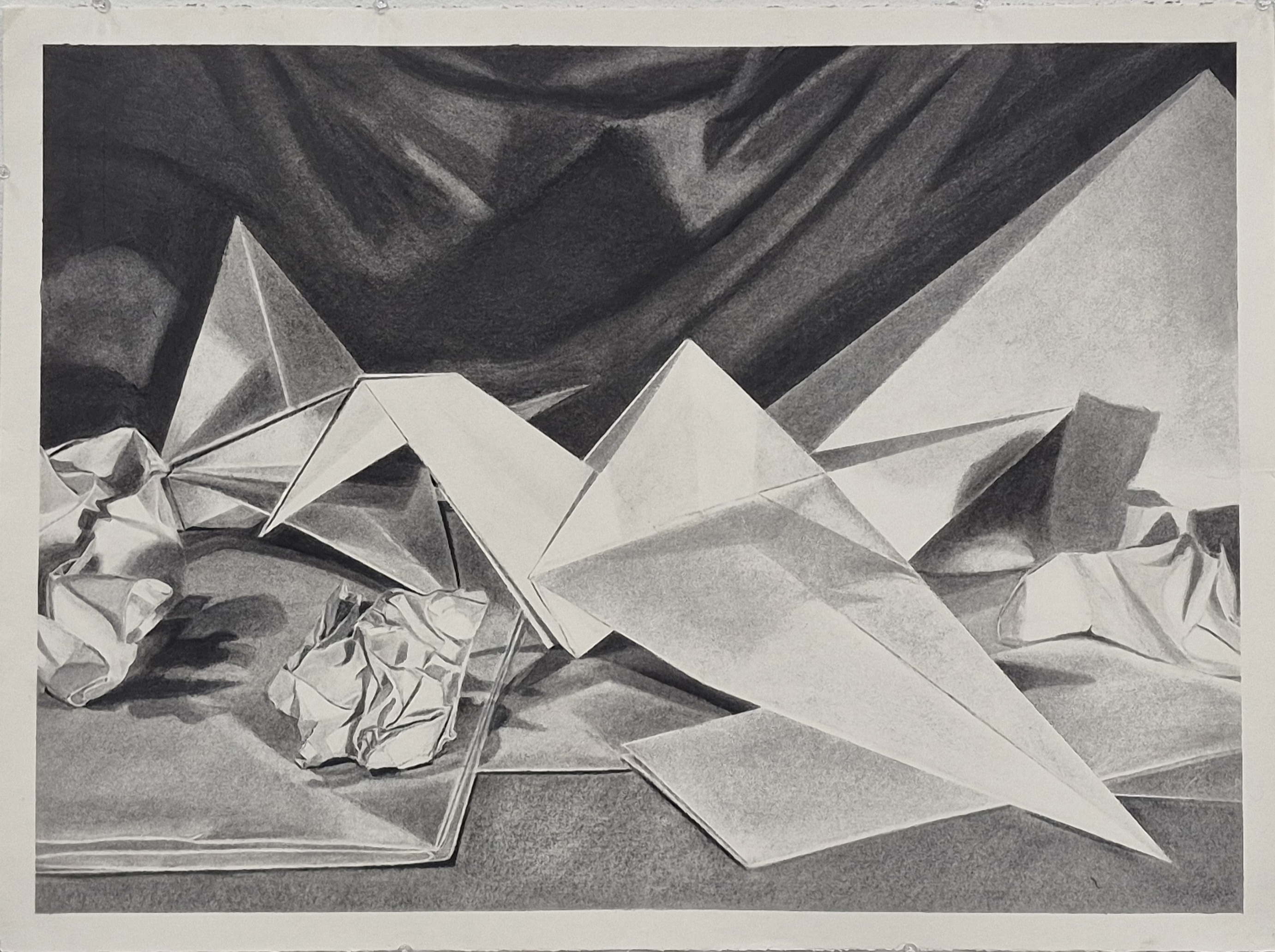
Perseverance
Zachary John
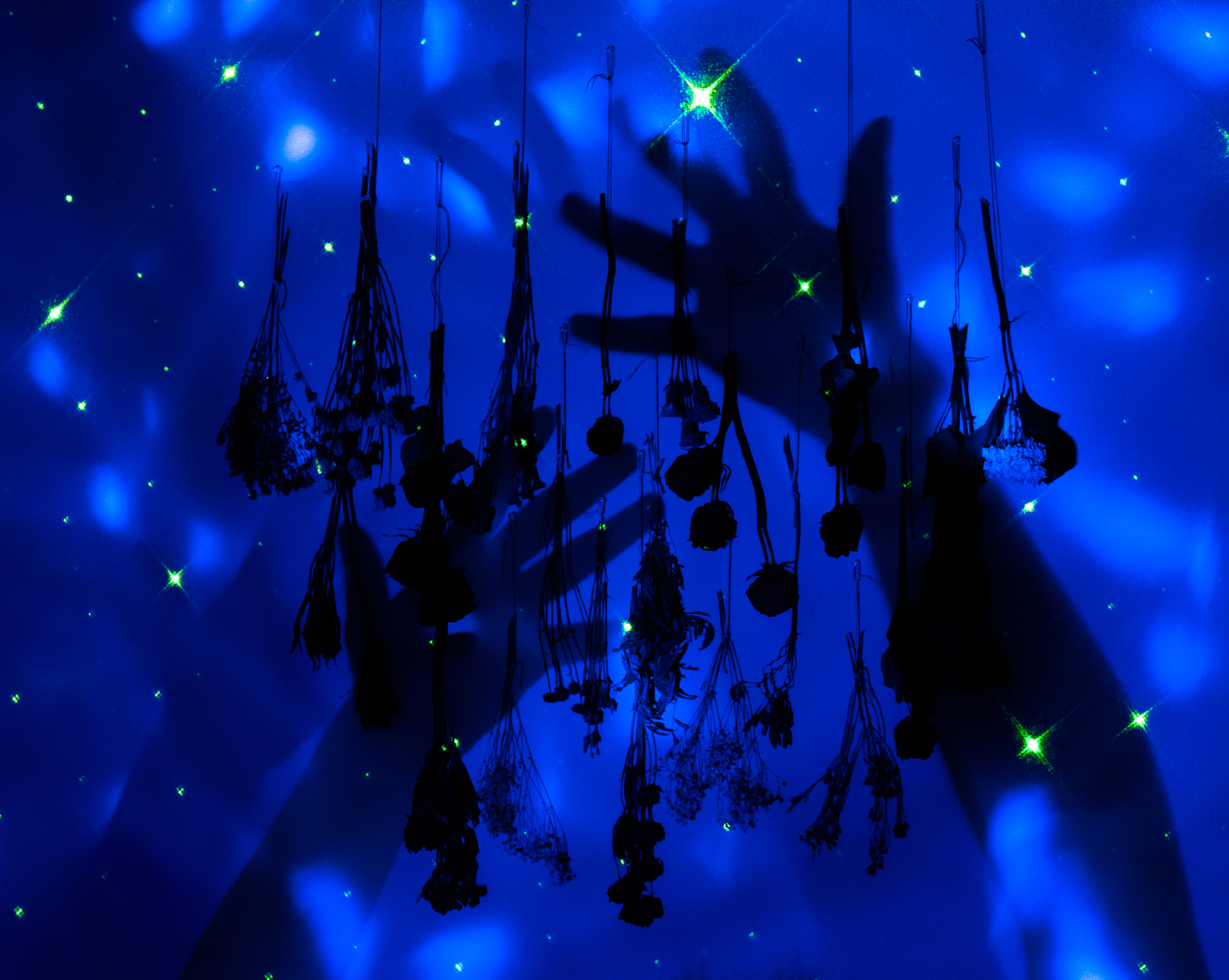
Ascensolation 6
Winter Tolson
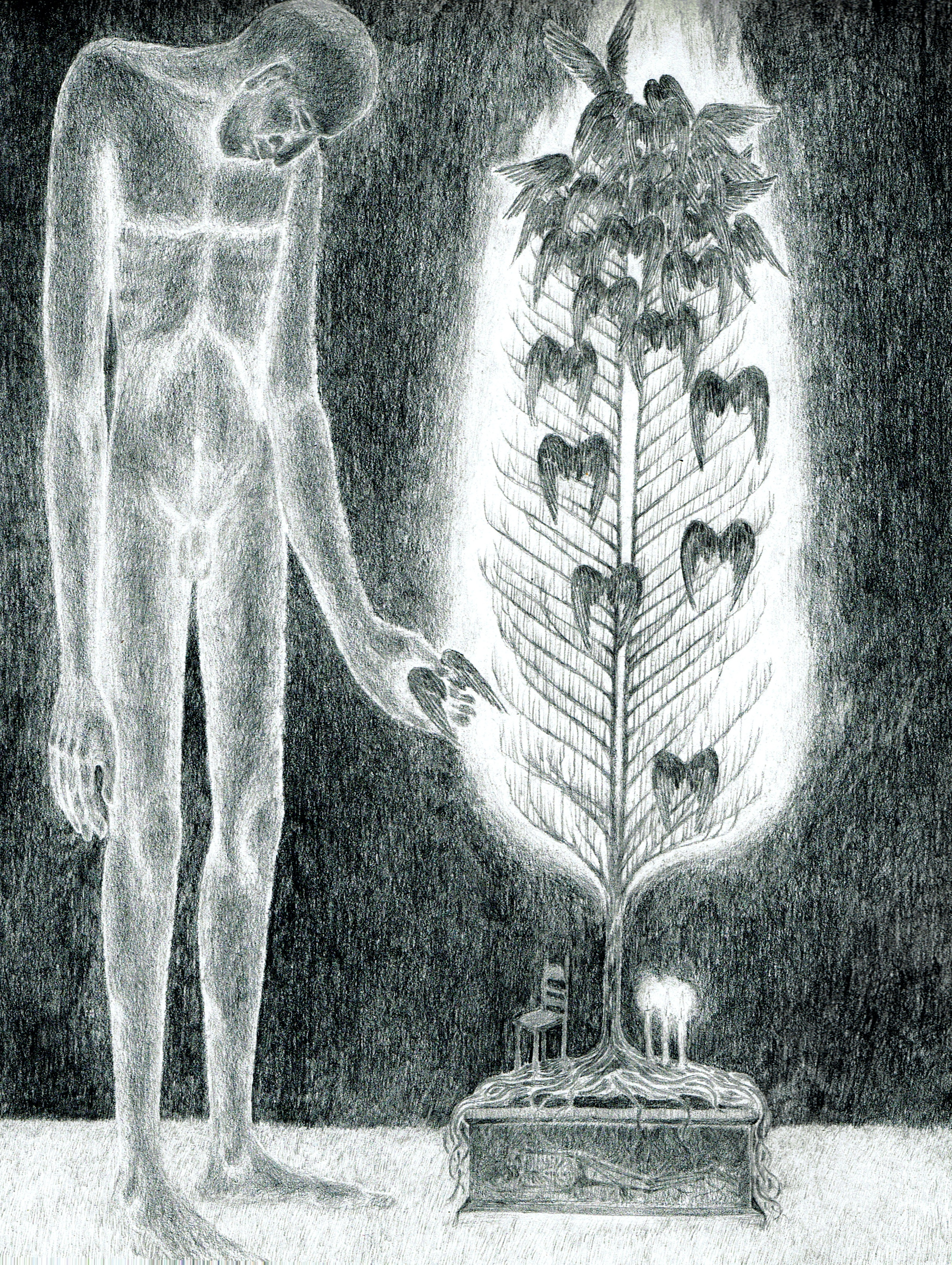
Orchard
Mickey Lusk
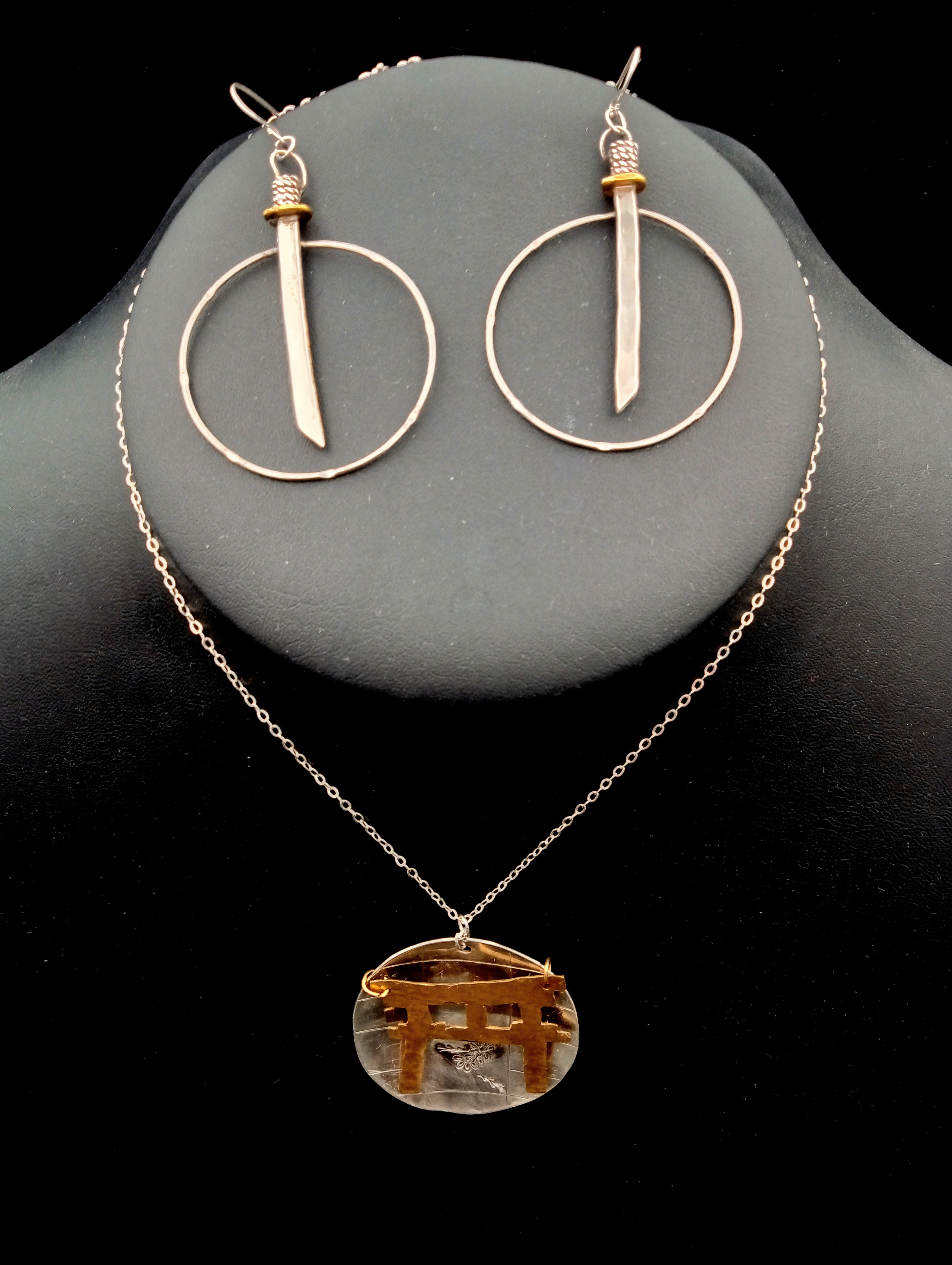
Gatekeeper Katana
Neisha Nichogi
Notes
Medium: Silver and copper
Height 5 mm x width 5 mm x
width 4 ½ (Pendant)
depth ½ mm Height 6 mm
(Earrings)
2025
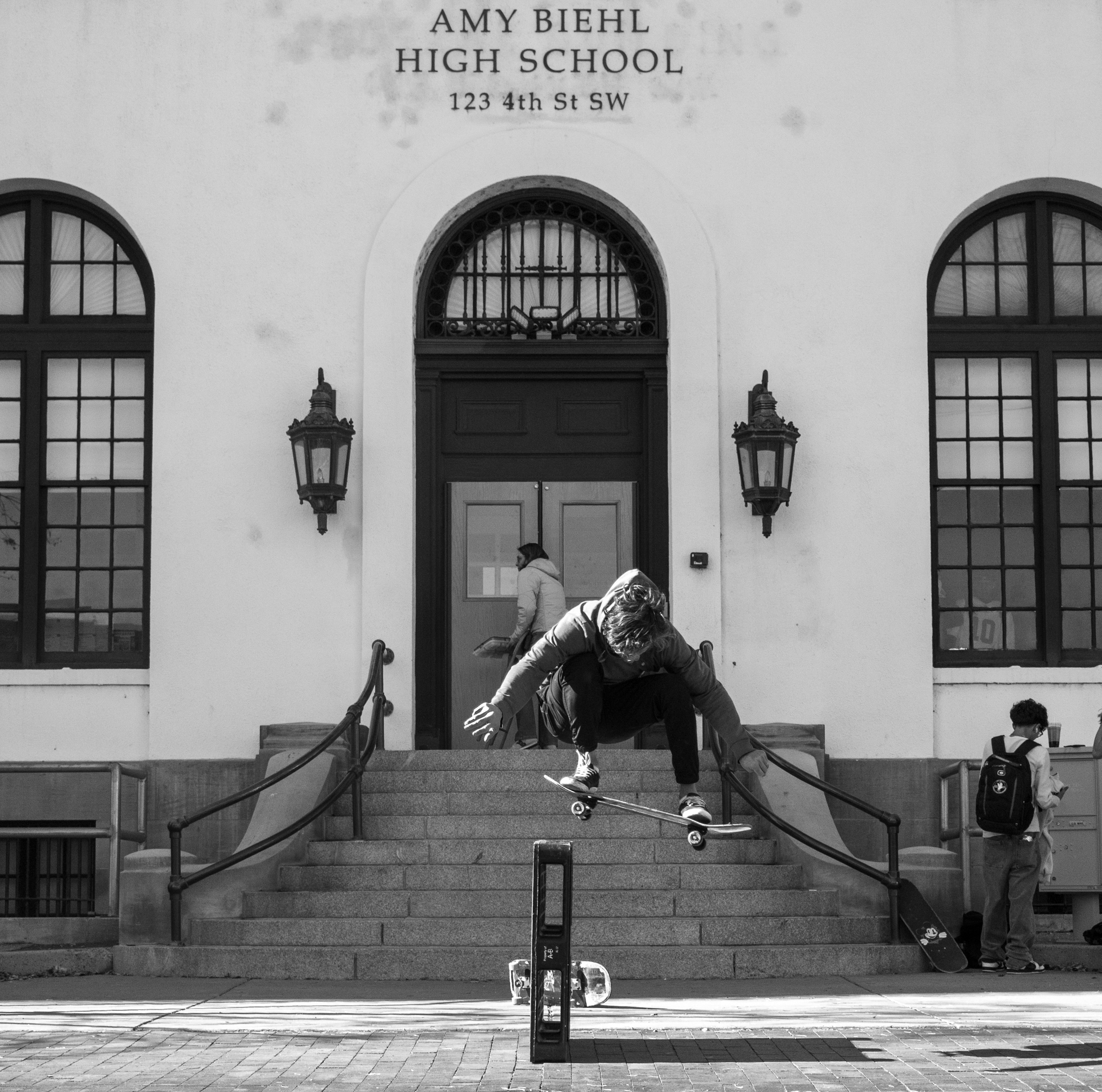
SK8 Daze
Samantha Hanes